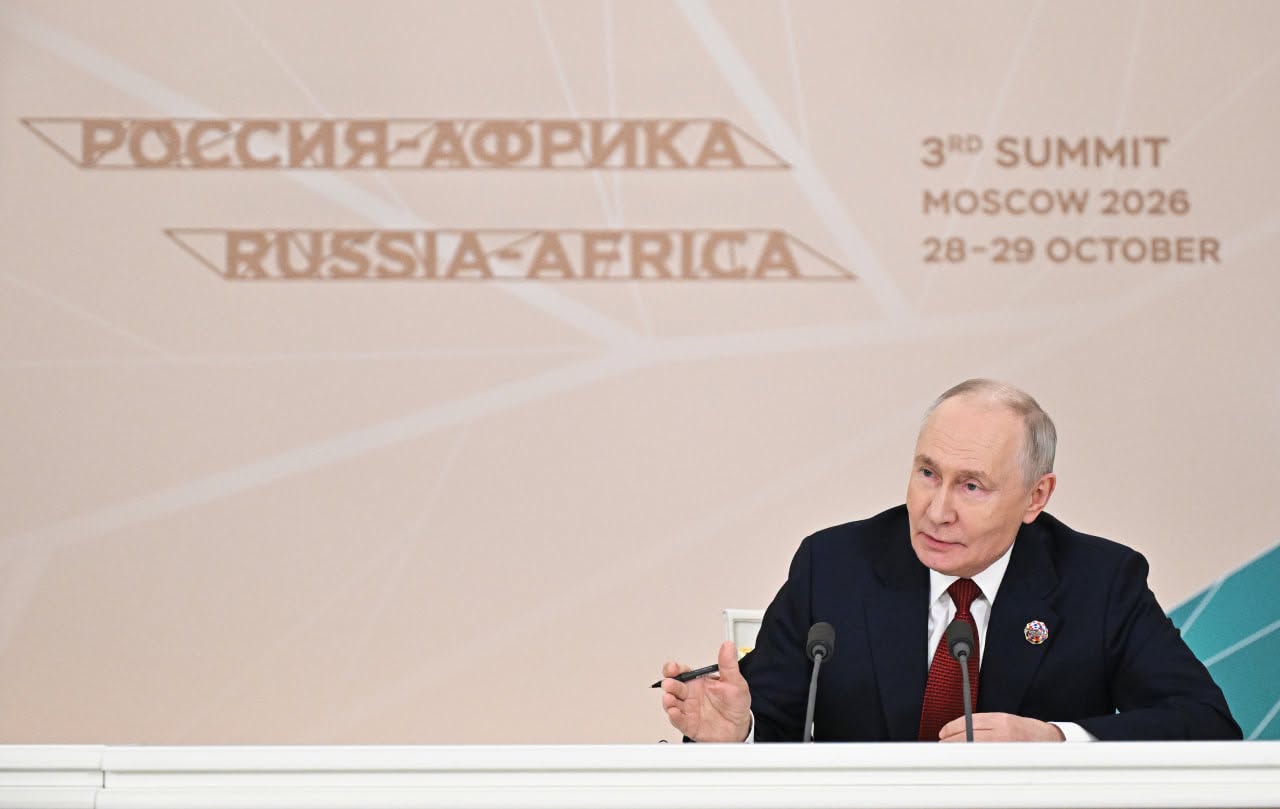
Russian President Vladimir Putin told the Russia-Africa Summit in Moscow on October 29 that Russia and African states are "natural allies" working toward a multipolar world order, according to ENA English. Speaking at the summit's second plenary session, he said the relationship rests on friendship and close partnership, and framed the gathering around sovereignty, equality and international law.
The summit is being held in the Russian capital, with the Russian presidency listing it as the third Russia-Africa Summit. ENA English reported Putin's remarks on October 30.
Why it matters
The language Putin used places the gathering well beyond trade. By casting Russia and Africa as partners in building what he called a "genuinely democratic world order," he positioned Moscow as an alternative to Western powers on a continent where several governments have grown more assertive about choosing their own alignments.
For African leaders, the summit is a venue to press for investment, food supplies and security support while avoiding commitments that could complicate relations with other partners. For Moscow, a visible partnership with African states offers diplomatic weight at a time when its ties with Western capitals remain strained.
The practical stakes are concrete: energy projects, grain shipments, arms and training, and the question of whether Russian pledges translate into deals that outlast the summit's communiqué.
Investment pledges and a contrast with colonial powers
Putin told the session that Russian firms have been running large investment projects across Africa in energy production, peaceful nuclear energy, mining, industrial cooperation, logistics and tourism, ENA English reported.
He argued that Russian companies operate differently from historical colonial powers, saying they work with African partners as equals and put their earnings back into local economies rather than extracting them. According to the same account, he said Russian businesses also transfer technology and expertise, hire local subcontractors, set up production and generate jobs.
Those claims were presented by Putin at the summit and have not been independently verified in the reporting summarized here. ENA English attributed them to the Russian president.
Putin also pointed to Russia's role as a supplier of food and agricultural products to African markets, saying those shipments help underpin food security on the continent. Food supply has been a recurring theme in Russia's outreach to African governments, many of which are sensitive to grain prices and import dependence.
Security cooperation and "African solutions"
On peace and security, Putin said Russia uses its permanent seat on the UN Security Council to help settle existing conflicts in Africa and to head off new ones. He said Moscow follows a principle he attributed to African leaders themselves: that African problems should have African solutions.
He added that Russia runs initiatives aimed at helping African countries maintain domestic stability, strengthen security and improve the capabilities of their defense and law enforcement agencies. The reporting did not specify which countries receive such support or what form it takes.
The emphasis on sovereignty ran through the speech. Putin said Russia wants to back African states as they defend their independence, pursue development on their own terms and build up their economies and social sectors, and he expressed readiness to keep working closely with them on those goals.
Diplomatic footprint expands
The summit also highlighted Moscow's expanding diplomatic presence on the continent. According to Anadolu Ajansı, Putin said Russia has opened eight new embassies in Africa since 2023, bringing its total to 48.
That detail underscores how much of the relationship is being built institutionally as well as commercially. A larger embassy network gives Moscow more capacity for routine engagement with governments, businesses and regional bodies — the kind of presence that sustains ties between headline summits.
Coverage of the event has drawn attention from multiple outlets, with Africanews reporting that Putin described African states as "natural allies" during the Moscow gathering and Al Jazeera examining the summit's agenda and its significance.
What to watch
The test of the summit will be in follow-through: whether the investment, food supply and security commitments discussed in Moscow turn into signed agreements and delivered projects, and how African governments balance those ties against their other international partnerships.